Michiel Riedijk on Building the Conditions for Urban Life
In a recent interview with the French architecture platform Architectures CRÉE, Michiel Riedijk, founding partner of Neutelings Riedijk Architects, reflects on the ideas that have shaped the practice for more than three decades. Rather than discussing architecture as the creation of isolated objects, he argues for an approach that focuses on creating the conditions for urban life.

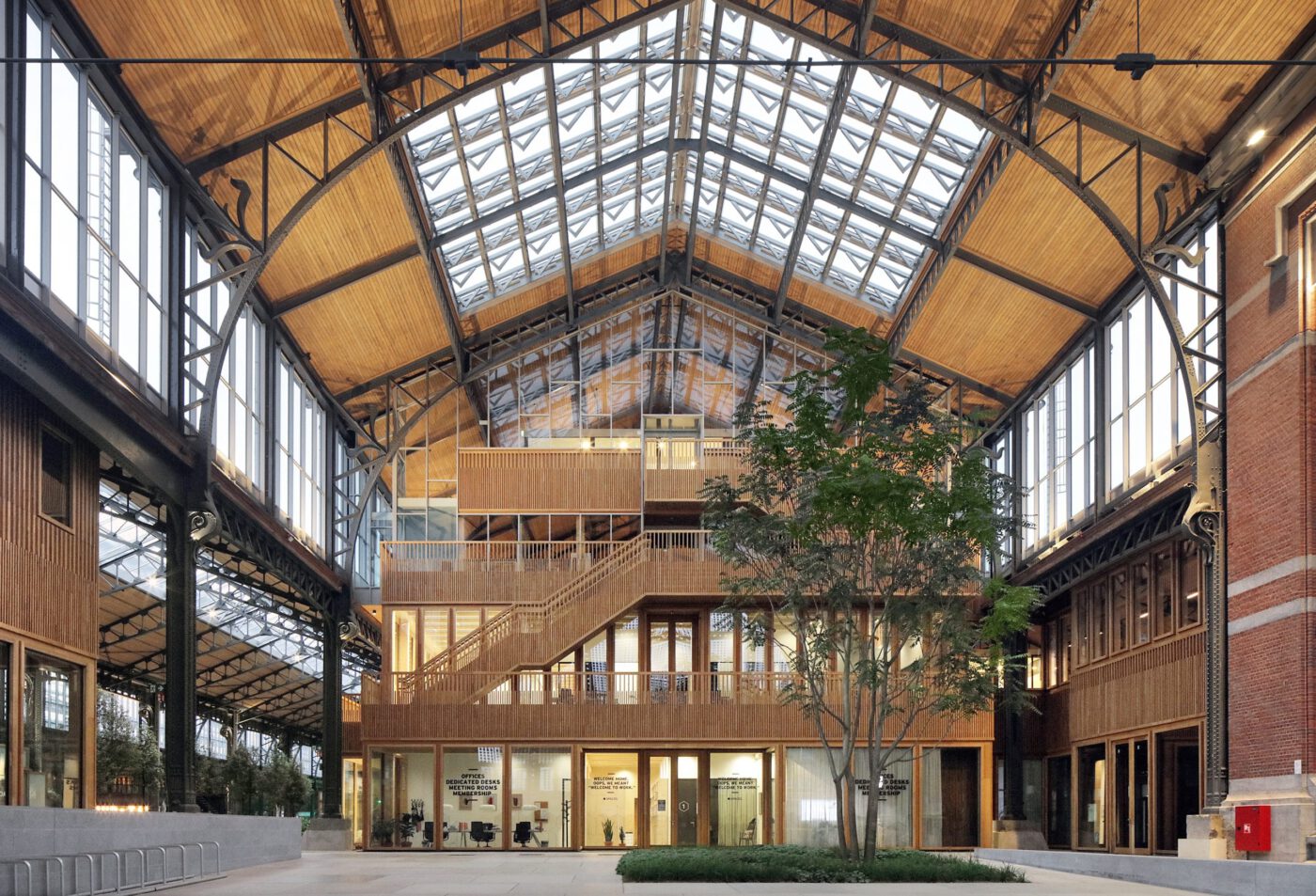
The interview explores themes that run through many of the office’s projects, including the transformation of Gare Maritime in Brussels, Naturalis Biodiversity Center in Leiden and the ongoing conversion of CAP44 – Cité des Imaginaires in Nantes. Across these projects, adaptive reuse is presented not as the preservation of the past, but as a way of enabling historic buildings to continue evolving as active parts of the contemporary city.
According to Riedijk, every transformation begins with a new programme. Historic buildings should not become static monuments, but remain living fragments of the city that can accommodate changing uses over time. Architecture provides the spatial conditions—light, acoustics, proportions, materiality and atmosphere—while future users ultimately determine how these spaces are inhabited.

Architecture as a Cultural Act
Beyond functionality, Riedijk describes architecture as a cultural and societal statement. Buildings inevitably contribute to the way cities evolve and are experienced. Projects such as Gare Maritime demonstrate how architecture can strengthen public life by creating generous collective spaces that reconnect neighbourhoods and encourage new forms of urban interaction.

Mixed-use as Long-term Resilience
One of the central themes of the interview is the importance of mixed-use development. Riedijk argues that mono-functional buildings become obsolete far more quickly than those capable of accommodating multiple programmes. Combining housing, workplaces, education, culture and public functions creates urban environments that remain resilient as society changes.
This philosophy underpins many recent projects by Neutelings Riedijk Architects, where adaptability is considered an essential component of sustainable urban development.
Rethinking Sustainability
For Riedijk, sustainability extends well beyond technical performance or energy efficiency.
“The true sustainability of a building lies in its ability to remain useful, adaptable and meaningful for decades—perhaps even centuries.”
Rather than relying solely on increasingly sophisticated building technologies, he advocates designing robust structures that can evolve over time. Longevity, flexibility and reversibility are, in his view, the most important measures of sustainable architecture.
Complexity as Opportunity
Throughout the interview, Riedijk returns to the value of complexity. Every commission represents a question posed by society, whether it concerns a museum, university, housing project or public building. The more complex the challenge, the greater the opportunity to develop nuanced architectural responses that balance social, technical and cultural ambitions.

Looking Beyond Architecture
The conversation concludes with reflections on the changing profession. While acknowledging the growing role of digital technologies and artificial intelligence, Riedijk emphasises that architecture ultimately serves society rather than itself. Observing how cities function, how people use public space and how buildings evolve over time remains fundamental to architectural practice.
The interview presents a concise overview of the principles that continue to shape Neutelings Riedijk Architects: designing buildings that embrace complexity, encourage change and create lasting conditions for collective urban life.

The original interview “Entretien avec Michiel Riedijk : « Construire les conditions de la ville »” was published by Architectures CRÉE.
Start the conversation? Contact us at pr.nra@neutelings-riedijk.com or call +31 10 404 66 77